Widespread Evacuations as Wildfire Engulfs French Pyrenees Foothills
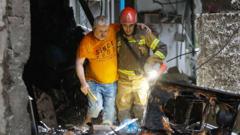
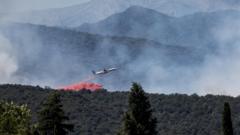
A large-scale wildfire in southern France has led to the compulsory evacuation of more than 10,000 individuals from numerous towns and villages situated in the Pyrenees foothills, close to the Spanish border. This incident unfolds as France, alongside other European nations, contends with an early summer heatwave that has brought extreme temperatures to the region. The blaze, which originated in Trévillach, near Perpignan, has consumed an estimated 4,600 hectares (approximately 11,366 acres) of land, as confirmed by local prefect Pierre Regnault de la Mothe via a social media post.
Interior Minister Laurent Nunez conveyed a somber outlook on French television, stating, "This morning conditions are deteriorating again. Today the battle resumes." Authorities have expressed apprehension regarding the potential for robust winds to exacerbate the fire's propagation. A local resident from Trévillach, identified as Patrice, recounted the rapid advance of the fire to AFP news agency, noting, "It came within 300 metres (984ft) of the houses. We were shocked by how fast it spread, it was staggering – bordering on panic."
Tour de France Adjusts Amidst Emergency Efforts
The unfolding emergency has also impacted the prestigious Tour de France cycling event. Spectators have been strongly advised to refrain from attending the conclusion of the third stage of the race, scheduled for Monday. This measure is intended to ensure unhindered access for emergency vehicles to the affected areas. The third stage, spanning 195.9km (121 miles), commences in Granollers, Spain, and is set to conclude in Les Angles, located within France's Pyrénées-Orientales region. Tour organizers have requested that fans and non-essential personnel maintain a distance from the final 40km of the route, and the customary motorcade of team vehicles will be significantly reduced.
Christian Prudhomme, the race director, emphasized the gravity of the situation, stating, "An exceptional fire calls for exceptional measures for the Tour. We invite the public not to come to the edge of the race or to the finish site." This proactive approach aims to prioritize public safety and facilitate the critical work of emergency services battling the inferno.
International Aid and Regional Impact
In response to the escalating crisis, European Commission President Ursula von der Leyen announced that the European Union would deploy four aircraft from Cyprus and Sweden to assist with the firefighting efforts. The fires have also extended their destructive reach into neighboring Spain. In the natural reserve of Les Gavarres, over 2,200 hectares have been destroyed. Catalan authorities reported late on Saturday that this particular blaze was stable and anticipated to be fully extinguished within the week. Further south in Spain, within the eastern Castellon province, approximately 500 individuals were evacuated following a wildfire's encroachment into the Sierra de Espadan national park.
Persistent Heatwave Fuels Fire Risk
The current heatwave is a significant contributing factor to the heightened fire risk. Temperatures in south-west France are projected to once again reach 40°C this week, while parts of Portugal and Spain have already experienced temperatures exceeding this mark. BBC Weather Lead Forecaster Matt Taylor commented on the situation, stating, "Although this heatwave is unlikely to break records in the way June's did, it will still be exceptional for the time of year. With the heat expected to persist into next week and little widespread rain forecast, the risk of further wildfires will remain elevated."
This current heat event follows a record-breaking heatwave in June, during which some areas recorded temperatures of 42°C. France experienced its hottest day on record nationwide on June 24th. The health impacts of such extreme weather are severe, with at least 2,025 excess deaths reported in France, 1,222 in Belgium, and approximately 480 in the Netherlands during the previous heatwave.
Climate Change and Europe's Vulnerability
The increasing frequency and intensity of these heatwaves and associated wildfires are strongly linked to global climate change. According to the Copernicus climate service, Europe is warming at twice the global average rate, making it the fastest-warming continent. This accelerated warming trend is leading to more intense summer heatwaves, placing greater strain on Europe's water resources, and contributing to a higher incidence of severe wildfires. The ongoing events in France and Spain serve as a stark reminder of the escalating environmental challenges faced by the region due to a changing climate.
Source: Original Article